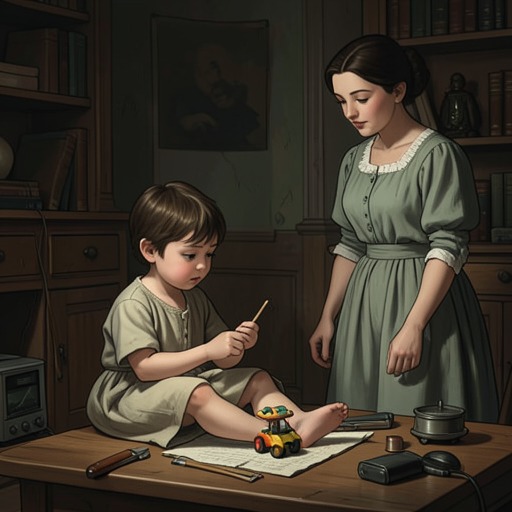
Kolya Krassotkin and Ilyusha: Classmates and Friends
The Brothers KaramazovKolya Krassotkin and Ilyusha are classmates whose friendship becomes most visible in the aftermath of Ilyusha’s death: at the funeral, Kolya stands among the schoolboys who gather to comfort Ilyusha’s father and preserve the memory of the boy who had stood by him. Their relationship gives the closing remembrance its personal center, linking loyalty between children to the novel’s call to remember, care for others, and meet life with courage.
Friendship and the Schoolboys
Ilyusha’s final request to his schoolfellows was that they stay with his father and be there for him. At the funeral, that request has become an obligation the boys carry together. About twelve arrive with their schoolbags or satchels still on their shoulders, and they have waited impatiently for Alyosha. Kolya is at their forefront: he greets Alyosha warmly, then explains that the scene is terrible to witness and that Ilyusha’s father, though sober, seems almost drunk with grief. The boys’ presence is not incidental company; it is the fulfillment of a promise made to their dying friend.
The group’s remembrance also recalls how Ilyusha had once stood alone against the whole school in defense of his father. The funeral speech asks the boys to remember not only Ilyusha’s face and clothes but his poor little boots, his coffin, and his unhappy, sinful father. These details make friendship an act of attention to the whole person and his circumstances, including the family sorrow that Ilyusha had asked them not to abandon.
Kolya’s Grief and Ideal of Sacrifice
Kolya’s response to the funeral is marked by an idealistic, even hazardous, admiration of self-sacrifice. When Alyosha says that the real killer was the servant and that his brother is innocent, Kolya exclaims that the brother will perish as an innocent victim and says that he envies him. Alyosha is surprised and challenges the thought. Kolya explains that he wishes he, too, could one day sacrifice himself for truth. His words do not establish that he understands the full cost of the suffering he admires; rather, they reveal how strongly the spectacle of disgrace and injustice has seized his imagination.
That moment gives Kolya’s grief a particular tension. He responds to another person’s ruin by imagining a future test of his own courage, while the funeral itself directs attention back to Ilyusha, the dead boy whose courage and goodness are being mourned. Kolya’s enthusiasm therefore sits beside the painful facts of the occasion: suffering is not an abstract opportunity for nobility, and the boys’ task now is to remember and support those left behind.
Remembrance and the Funeral’s Promise
At the graveside, the boys promise to remember Ilyusha forever. Their pledge takes shape through particular memories: his face, his clothes, his small boots, his coffin, and his solitary defense of his father against the school. They answer that he was brave and good, giving the gathering a shared language for grief without reducing him to the fact of his death.
Kolya’s own exclamation, “Ah, how I loved him!” makes explicit the affection that underlies the group’s public vow. The scene then turns remembrance outward. Alyosha urges the children not to fear life and connects life’s goodness with doing something good and just. In this ending, Kolya and Ilyusha’s friendship is more than a private bond recalled after death: it becomes part of a collective promise to keep the dead boy’s example alive through loyalty, remembrance, and good action.